
Where Sovereign Capital Meets National AI Ambitions (SWFs’ AI and AI’s own SWF)
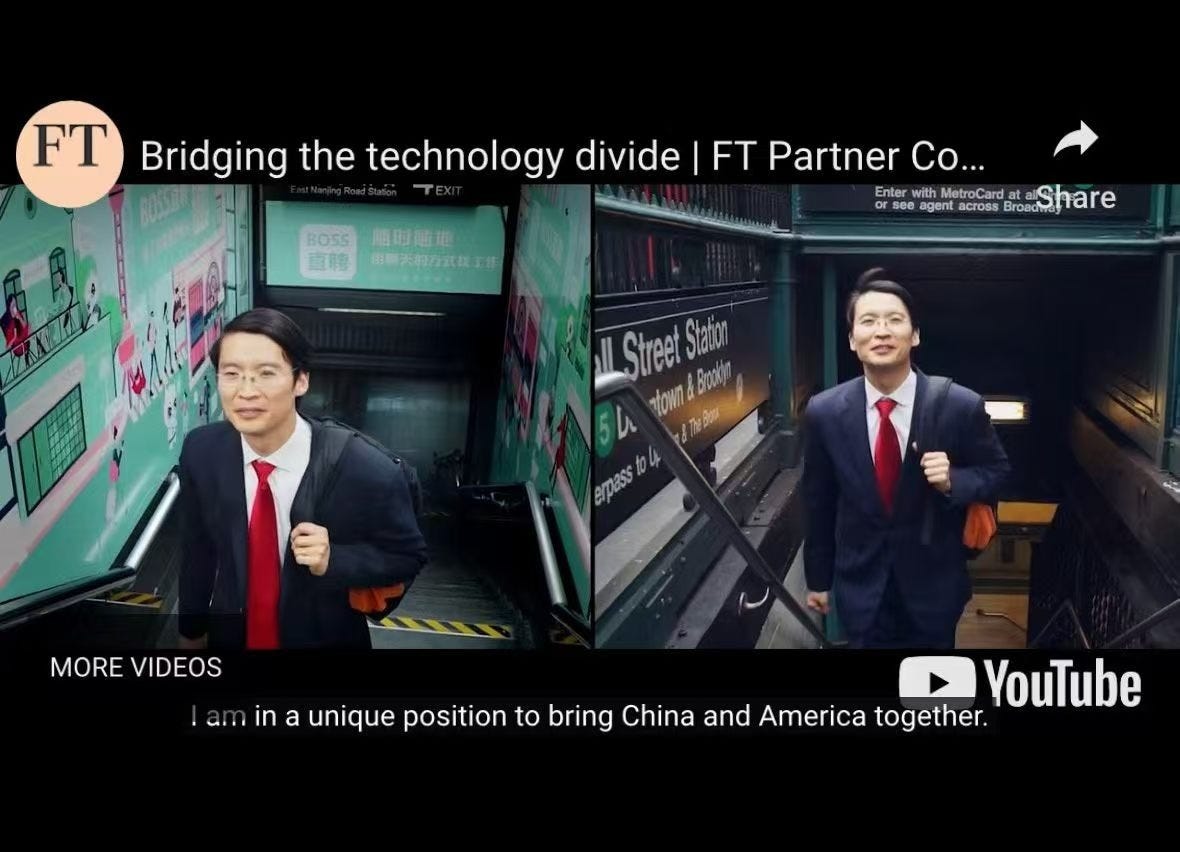
The only AI investor and SWF-focused NYU professor who's worked inside a major sovereign wealth fund — decoding sovereign AI capital.
Why This Publication Exists
Every week, trillions of dollars of sovereign capital — from Abu Dhabi to Singapore to Beijing — are quietly making decisions that will determine who owns the infrastructure of the AI age.
The sovereign AI super-cycle is the most consequential capital reallocation of this decade. Just to name a few:
Abu Dhabi has assembled a coordinated five-layer AI stack across Mubadala, MGX, G42, and Khazna.
Saudi PIF is deploying HUMAIN as a vertically integrated national AI champion.
China’s Big Fund has extended its mandate from semiconductor manufacturing into frontier model labs.
The United States is actively debating whether the government should take equity stakes in its own AI companies.
Most English-language commentary covers one of these dimensions. No one else covers all four — sovereign capital, national AI infrastructure, US-China geopolitics, and primary-source Chinese AI intelligence — with equal authority and operational experience.
This publication was built to close that gap.
Who I Am
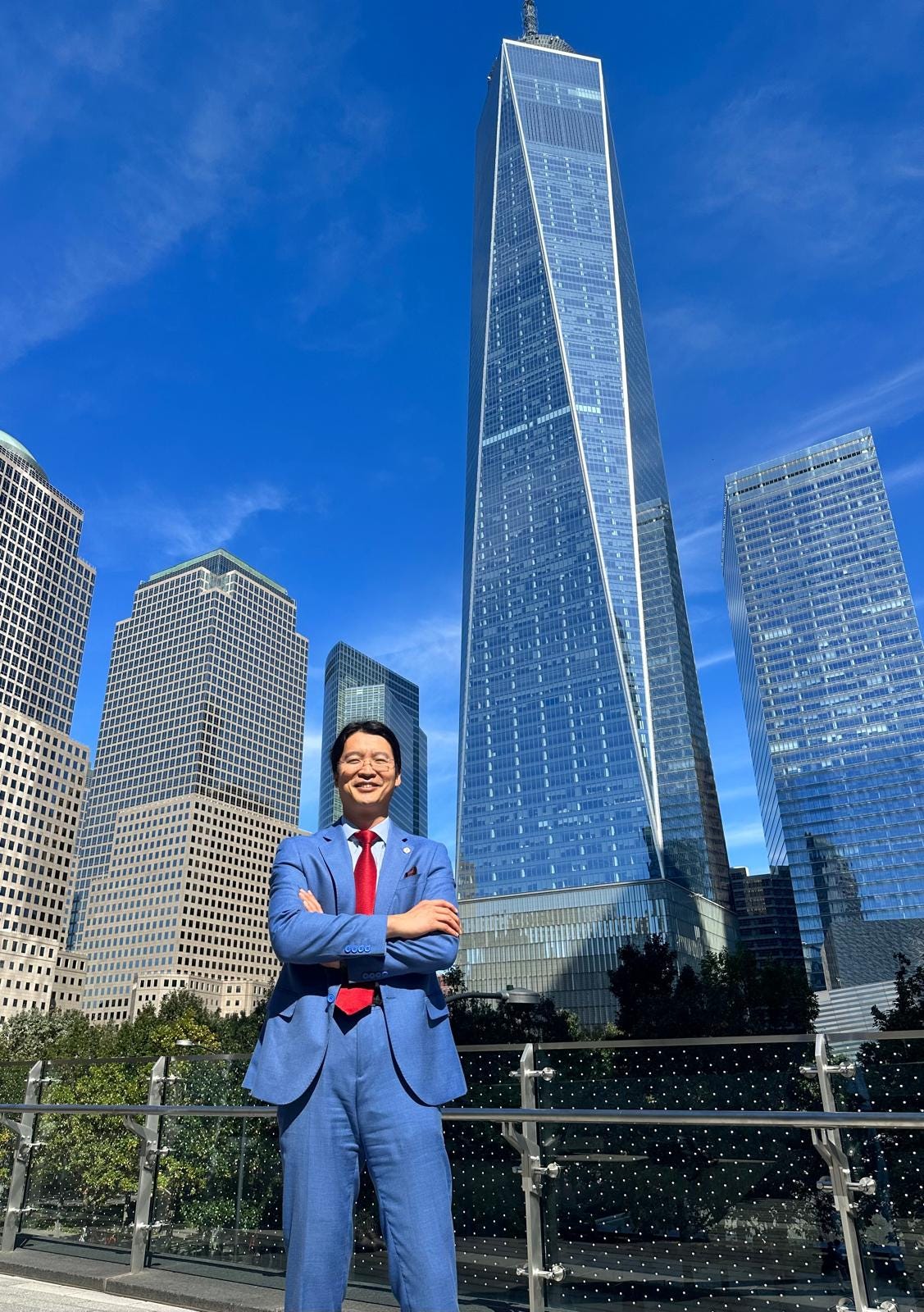
I am Winston Ma (马文彦), CFA and Esq. — a New York-based US family office AI investor (Co-founder of Dragon AI), SWF-focused NYU Law professor, and former Managing Director at China Investment Corporation, the $1.57 trillion sovereign wealth fund.
To my knowledge, I am the only person who has held a senior investment officer role inside a major sovereign wealth fund while also maintaining an active academic research and teaching mandate specifically focused on sovereign capital. My background as a lawyer admitted in both New York and China informs the legal and regulatory analysis that runs through every issue. That combination — practitioner and scholar, English and Chinese, Wall Street and Beijing — is what this publication runs on.
My books — The Hunt for Unicorns (Wiley, 2020), The Digital War (Wiley, 2021), and Blockchain and Web3 (Wiley, 2022) — document the sovereign capital and digital economy dynamics now playing out in real time. The Hunt for Unicorns (the textbook for my NYU adjunct professor course) carries forewords from Margaret Franklin (CEO, CFA Institute), Russell Read (former CIO, CalPERS, GIC-Kuwait, and APFC), and Ajay Royan (Mithril VC). I write regularly for the CFA Institute, CAIA, OMFIF, and JIC, and have appeared on CNBC and Bloomberg TV.
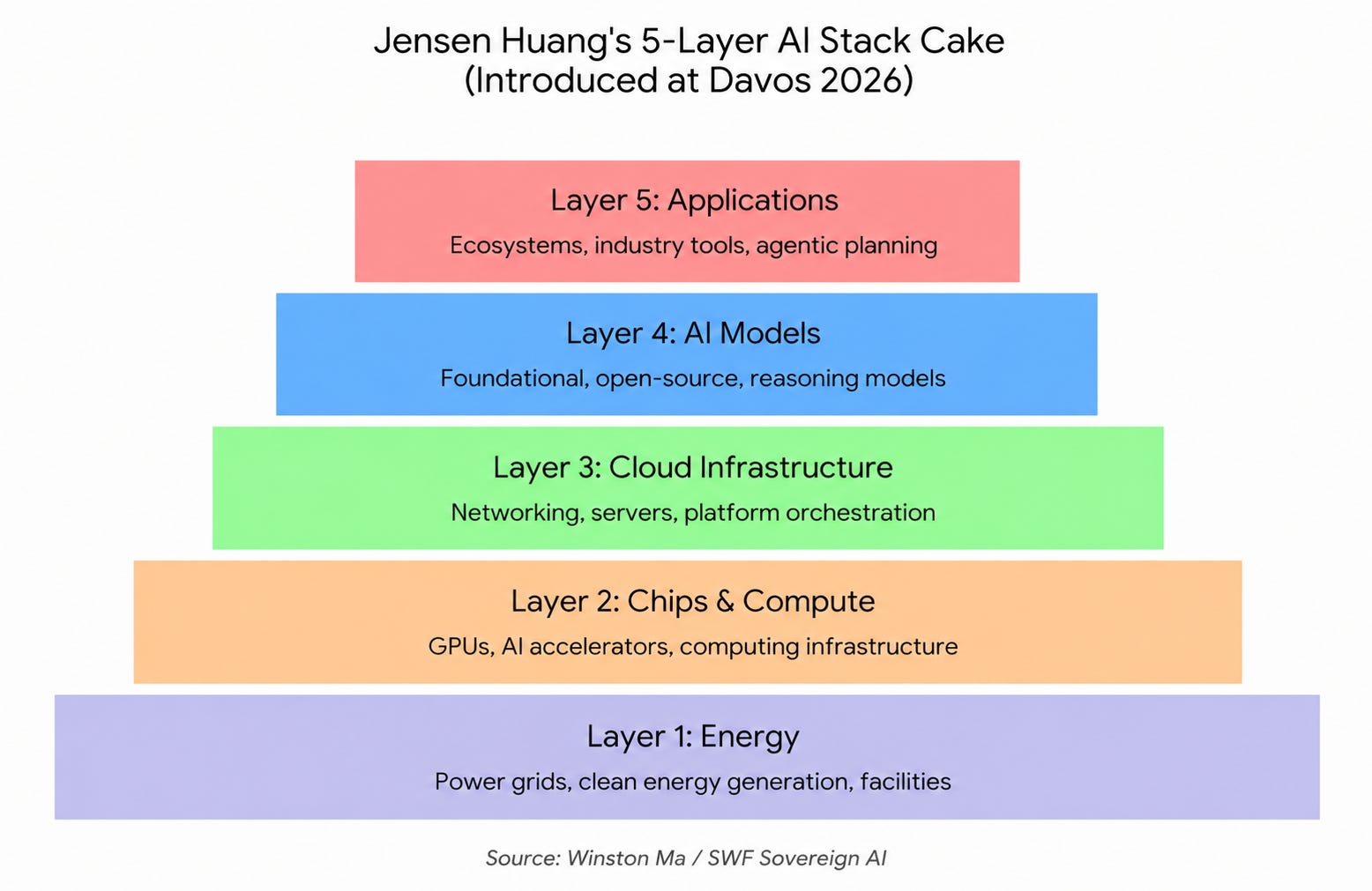
I serve as Executive Director of the Global Public Investment Funds Forum and Adjunct Professor at NYU School of Law (with both senior JD/ LLM law students and NYU Stern MBA students in my class). My analysis is grounded in the same lens I applied while leading North America investments at CIC: rigorous, metrics-driven, and focused on durable sovereign advantage across Jensen Huang’s five-layer AI stack.
The Five Pillars of Coverage
① Sovereign Capital at Scale Gulf sovereign funds are deploying $30–40 billion into AI infrastructure in single transactions. China’s Big Fund crossed from chip manufacturing into frontier AI model labs via DeepSeek at a $50 billion valuation. Korea’s National Growth Fund wrote sovereign equity checks into both an AI chip company and an AI model lab in the same quarter. Canada launched its first national sovereign wealth fund in April 2026. The era of passive sovereign investing is over — state capital has become the primary architect of the AI stack.
② National AI Infrastructure Jensen Huang declared at Davos 2026 that every nation must own the production of its own intelligence. Every major sovereign capital vehicle now has a direct infrastructure mandate. This publication tracks where those mandates turn into capital flows — layer by layer across the AI stack: Energy (Layer 1), Chips & Compute (Layer 2), Cloud (Layer 3), AI Models (Layer 4), Applications (Layer 5).
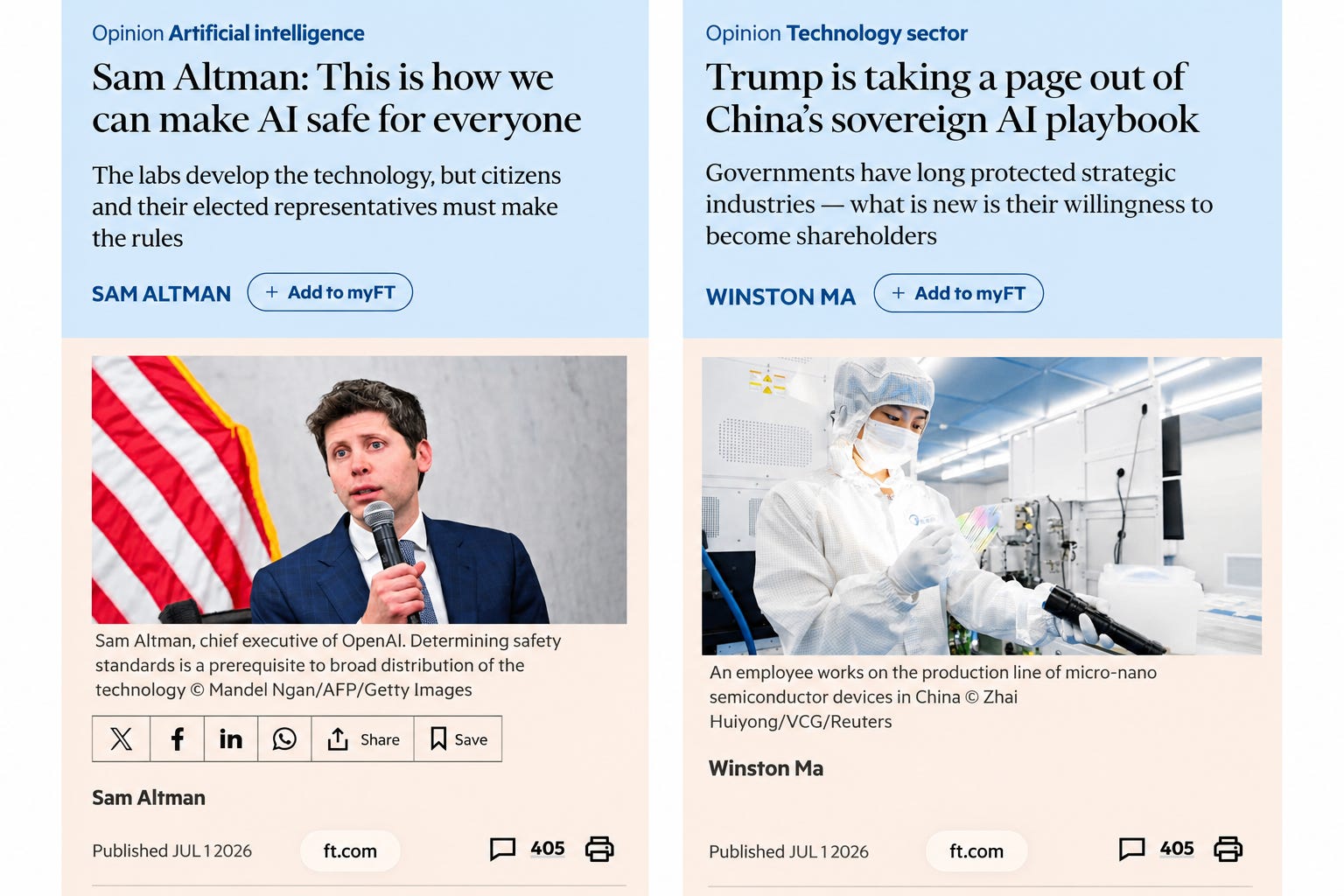
③ US-China Geopolitics of Capital China’s Big Fund quietly entering DeepSeek and the Trump administration actively discussing government equity in OpenAI are not separate stories — they are the same story from opposite ends of the geopolitical spectrum. This publication covers both with the same analytical standard, in the same issue, because understanding one without the other produces an incomplete picture.
④ Primary-Source Chinese AI Intelligence The most consequential AI decisions in the world are documented in Chinese: in Party Magazine Qiushi speeches, PBOC filings, and Yicai reporting that Western outlets do not access. Every Monday, Beijing Signal decodes four primary-source China AI intelligence items into institutional English — the only such product available in the English-language market.
⑤ The Governance Infrastructure: Law and Regulations. Infrastructure and capital mean little without the legal and regulatory “operating system” that governs them. From Europe’s GDPR and Microsoft’s Sovereign Cloud offerings to emerging data localization laws in the Gulf and Southeast Asia, nations are rapidly erecting regulatory moats around where data lives, how AI processes it, and who can access it. These frameworks increasingly determine where sovereign capital can legally flow — and under what conditions. As a former practicing lawyer admitted in both New York and China, I bring a unique legal-institutional lens to this publication.
SWFs' AI and AI's Own Sovereign Wealth Fund
Sovereign capital and artificial intelligence intersect in two directions, not one.
SWFs’ AI — how sovereign wealth funds engage with artificial intelligence — spans three distinct aspects:
investment (capital deployed into AI infrastructure, compute, semiconductors, and foundational models — the Gulf funds anchoring today’s largest AI deals);
governance (how sovereign shareholders exercise the influence that capital buys — board seats, voting behavior, stewardship once the stake is in); and
implementation (how funds use AI internally to upgrade their own investment process — underwriting, portfolio analytics, risk modeling).
AI’s own SWF — the emerging idea that AI-generated wealth warrants a public claim, structured as a fund in its own right — raises a parallel, still-unsettled set of three questions:
funding source (mandatory equity transfer, voluntary contribution, taxation, or a state simply redirecting an existing account — Korea’s own pivot shows this isn’t limited to the Senator Sanders-versus- OpenAI Sam Altman binary);
governance model (direct state control versus arm’s-length institutional design); and
distribution discipline (one-off populist payouts versus reinvestment that compounds across generations — where national legislatures and multinational rulemaking may both come into play).
What You Receive
🔵 Beijing Signal — Free, every Monday Four primary-source intelligence items from China’s AI and sovereign capital landscape, decoded for institutional readers. Each item moves from Chinese-language original to analytical English observation, with the specific context no wire service provides. Free, always.
🔴 China AI Insider — Paid flagship, every Friday our fully-documented China AI stories with Chinese-language primary sources translated and contextualised, adds one or two further items that emerged after the Beijing Signal dispatch, plus a 2,000–3,000 word institutional deep dive on the week’s most consequential development. 15–18 minutes. For readers who need to understand China’s AI trajectory as a professional responsibility, not an intellectual interest.
🟡 Capital Signal — Paid, bi-weekly (every other Wednesday) The global sovereign wealth fund intelligence digest. Five geographic blocs — Gulf & Middle East, North America, Asia-Pacific, Global, and a dedicated China Sovereign AI Capital section — tracking capital deployments, strategic pivots, and personnel moves across the sovereign AI stack. Approximately 2,400 words and 10–12 minutes. When the month's news warrants it, one issue is a Flex Deep-Dive Analysis — a 2,000–3,000 word single-topic briefing on the most consequential sovereign capital development of the moment, designed to function as an investment committee document.
⚫ Sovereign AI Outlook — Paid, quarterly (first issue: early July 2026) The flagship institutional report. 6,000–8,000 words. A comprehensive synthesis of where sovereign capital is flowing, organised by region and theme, with data tables and forward scenarios. Designed for institutional circulation: fund managers, policymakers, and executives who need a defensible analytical framework for their sovereign AI investment decisions. Each Outlook publishes in two parts: the full institutional report for Insider Track subscribers is published first — replacing Capital Signal that week — followed by a free executive summary (~1,200 words) with the top findings and forward thesis, available to all readers on the weekend after the paid report.
Who This Is For
Fund managers and CIOs at sovereign wealth funds, pension funds, and family offices who need to track where state capital is flowing before it becomes public news.
National security and trade policy professionals who need to understand the capital dimension of the AI race — not just the technology dimension.
Technology executives whose companies are being acquired by, partnered with, or competing against sovereign AI vehicles.
Academic researchers in international finance, digital economy, and AI governance who need primary-source evidence that English-language databases do not carry.
Journalists covering institutional investing who need Chinese-language intelligence they cannot access independently.
This publication is not for you if you are looking for cryptocurrency trading signals, general AI technology commentary, or Silicon Valley product coverage. The lens here is always sovereign capital and geopolitical strategy — not consumer technology.
What Founding Members Are Saying
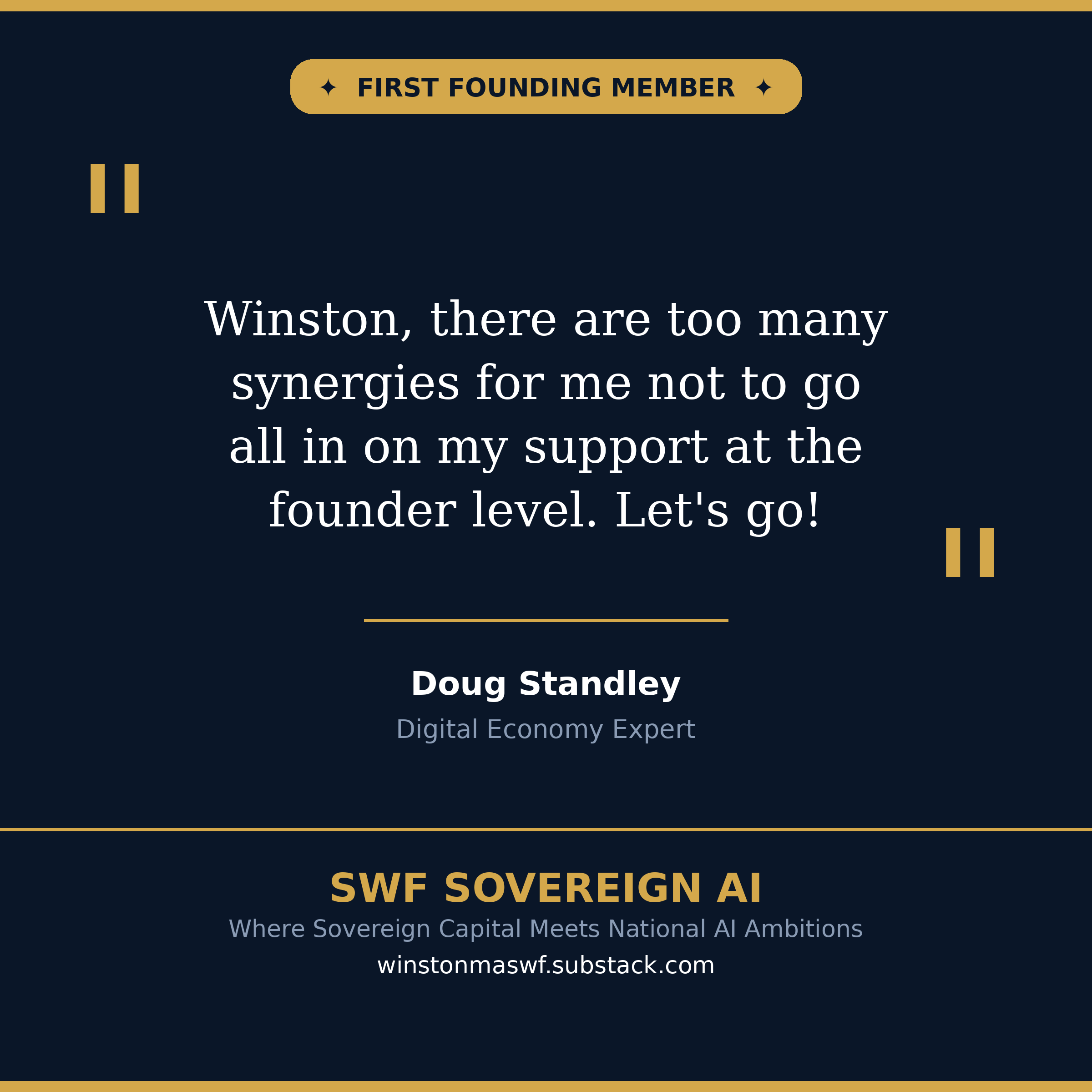
“Winston, there are too many synergies for me not to go all in on my support at the founder level. Let’s go!” — Doug Standley, Digital Economy Expert — First Founding Member
Subscribe
Beijing Signal is free. The Insider Track — Capital Signal, China AI Insider, and Sovereign AI Outlook — is available now to paid subscribers.
🍎Want to see what you're subscribing to first? Every issue published before the paywall is free to read in the archive.
Want to see what the Insider Track looks like? Three formats, three samples — all free:
📄 Trump’s OpenAI Move Mirrors China’s Sovereign AI Playbook — Capital Signal Flex Deep Dive, June 10 → (bi-weekly, Capital Signal deep-dive format)
📄 The Stack Gets Funded (led by GIC - Anthropic) — Capital Signal, 1 June 2026→ (bi-weekly, Capital Signal standard digest format)
📄 Dual Circulation, AI Edition (Big Fund → DeepSeek) — The China AI Insider, June 5 → (weekly, China AI Insider flagship format)
Subscribe free — Beijing Signal; Subscribe Insider Track — Capital Signal + China AI Insider + Sovereign AI Outlook
SWF Sovereign AI is published by Winston Ma (马文彦) at winstonmaswf.substack.com
Subscribe the Inside Track to get full access to all newsletters.
I Want to Hear From You
Drop a comment below and let me know: What aspect of Sovereign AI are you most curious about right now?
A specific country’s AI stack?
A layer of Jensen Huang’s cake?
A recent SWF deal?
A data-sovereignty challenge?
China’s AI policy moves?
The more I understand what you’re wrestling with, the more useful I can make this newsletter.
With gratitude,
Winston Ma Former Managing Director, China Investment Corporation · NYU Adjunct Professor · Executive Director, Global Public Investment Funds Forum · Author, The Hunt for Unicorns · World Economic Forum Young Global Leader (2013).
